
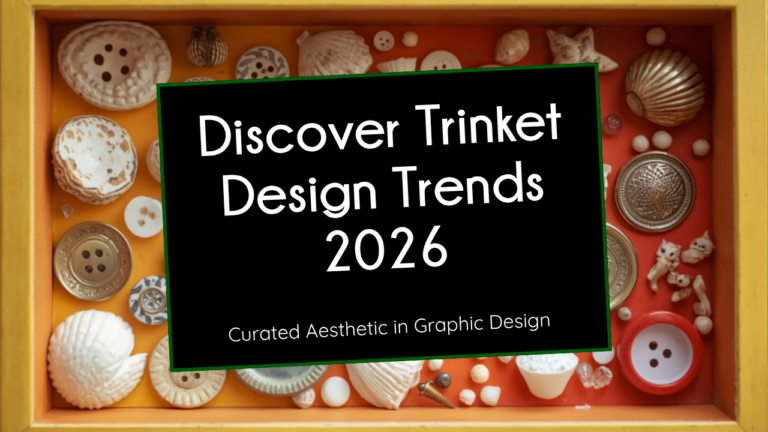
Kittl’s 2026 graphic design trend report keeps surfacing fresh, tactile alternatives to the polished, AI-perfect look that dominated the last few years, and Trinket Design is one of the more distinctive entries on the list. It swaps sleek minimalism for something closer to a curiosity cabinet, and it is starting to show up in packaging, social content, and brand identity work.
What Trinket Design Actually Looks Like
Trinket Design arranges small, everyday objects, think shells, buttons, charms, pins, and other pocket-sized keepsakes, into museum-style display layouts. Picture a shadow box or a specimen tray: items are laid out deliberately, spaced with care, and often labeled or annotated the way a collector might catalog a personal archive. The effect is part scrapbook, part exhibit, and it translates a sense of personal identity through the objects a brand or person chooses to display.
It sits alongside other 2026 trends from the same Kittl report, like Naive Design’s deliberately imperfect linework and Blueprint Design’s technical schematic style. What connects all of them is a shared reaction against over-polished, AI-generated visuals. Trinket Design specifically leans on tactility and personal curation, giving a design a sense that a real person chose and arranged every piece.
Why It’s Resonating Right Now
Consumers are increasingly drawn to design that feels handmade and specific rather than mass-produced and generic. Trinket Design taps directly into that shift. A curated collection of small objects reads as intentional and personal in a way that a clean, symmetrical layout does not. It also borrows credibility from museum and archival aesthetics, giving even a simple product display a sense of thoughtfulness and permanence.
How Brands Can Use Trinket Design Without Overdoing It
Trinket Design works best as an accent, not a wholesale rebrand. A few ways to bring it in without losing brand consistency:
- Use it for a single campaign or seasonal collection rather than your core brand identity, it is a strong device for storytelling content, not necessarily your logo system.
- Photograph or illustrate real product details, ingredients, or small brand artifacts in a shadow-box or specimen-tray layout for social posts and packaging inserts.
- Add small hand-lettered or typewriter-style labels underneath each object to reinforce the “curated collection” feeling.
- Keep the background simple and neutral so the individual objects stay the visual focus, this trend depends on restraint around the edges even as the objects themselves feel personal and specific.
For a Miami boutique, spa, or specialty food brand, Trinket Design offers a genuinely different way to show product ingredients, packaging details, or brand story elements, arranged like a small exhibit rather than a standard flat-lay photo.
Where This Trend Is Headed
Expect Trinket Design to keep showing up in packaging inserts, Instagram carousels, and limited-edition product displays through the rest of 2026, especially from brands leaning into a handmade, personal-collection identity. It pairs particularly well with small-batch, artisanal, or locally made products where the story behind each item matters as much as the item itself.
Frequently Asked Questions
What is Trinket Design?
Trinket Design is a 2026 graphic design trend from Kittl’s trend report that arranges small personal objects, like shells, buttons, and charms, into museum-style, curated display layouts.
What makes Trinket Design different from other 2026 design trends?
Where trends like Naive Design use imperfect linework and Blueprint Design borrows technical schematics, Trinket Design focuses on tactile, curated object arrangements that feel personal and archival rather than illustrated.
How can small businesses use Trinket Design?
Small businesses can apply it to seasonal campaigns, packaging inserts, or social content by photographing or illustrating product details in a shadow-box style layout with simple labels, without rebuilding their entire brand identity around it.
What products work best with Trinket Design?
Small-batch, artisanal, or locally made products work especially well, since the trend’s curated, specimen-tray feel reinforces a sense of craftsmanship and individual story behind each item.