
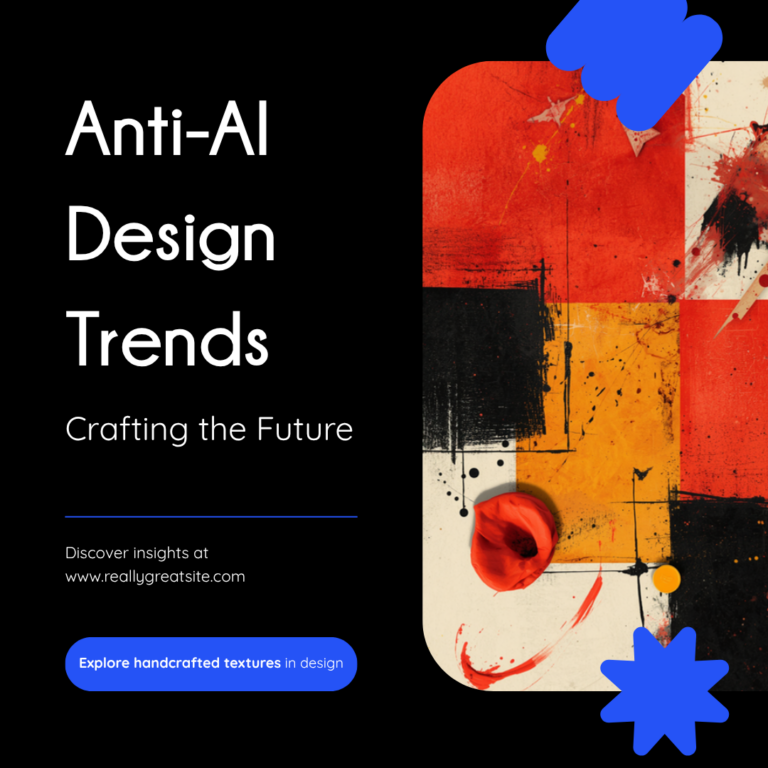
After two years of AI-generated visuals flooding every feed, the biggest design trend of 2026 is a rejection of that exact aesthetic. Brands are deliberately choosing visible imperfection, texture, and human hands over algorithmic polish, and it is showing up everywhere from luxury fashion campaigns to small business packaging.
Anti-AI Crafting Is the Headline Trend
Designers are leaning hard into hand-built sets, stitched textures, analog surfaces, physical collage, ink, and clay, work where the marks of the maker are the point rather than a flaw to smooth over. Burberry’s Cross-Stitch Knight Life campaign and Apple’s hand-blown glass Apple TV intro are both examples of major brands signaling craftsmanship as a differentiator in an AI-saturated world. For a small business, this trend is genuinely good news: it does not require a massive production budget so much as a willingness to show real texture, real hands, and real process instead of another perfectly smooth render.
AI Is Reviving Traditional Craft Techniques Too
The trend is not simply anti-technology. Generative AI is also being used to revive forgotten techniques like woodcut illustration and stone carving, making them accessible in modern workflows without requiring years of traditional training. Used this way, AI becomes a bridge back to craft rather than a replacement for it.
Emotional Color Is Replacing Clinical Palettes
Brands are moving away from cool, minimal, tech-default color schemes toward brighter, warmer, more expressive palettes. The shift toward surreal, escapist color choices is aimed squarely at Gen Z audiences who are tired of sterile digital aesthetics and responding to visuals that feel emotionally alive rather than optimized.
Multisensory and Character-Driven Identities
Design systems are increasingly built around motion, gradients, 3D elements, and tactile textures that shift and respond across platforms instead of sitting static. At the same time, brand mascots and characters are making a comeback, partly because agentic AI experiences need a familiar, trustworthy personality attached to them. Typography itself is also being pushed forward as a primary design element rather than a supporting one, doing more of the work of communicating brand voice on its own.
What This Means for Your Brand
If your visual identity has been leaning on the same clean, AI-adjacent look everyone else has, 2026 is the year to add texture back in: real photography over stock renders, imperfect hand-drawn elements, warmer color choices, and a character or mascot that gives the brand a face. None of this requires abandoning digital tools, it just means using them to add humanity back into the work rather than smoothing it out.
Frequently Asked Questions
What is “anti-AI crafting” in graphic design?
It is a 2026 design trend where brands intentionally use hand-made, textured, analog-feeling visuals such as stitching, collage, ink, and clay to stand apart from polished AI-generated imagery.
Why are brands using brighter, warmer colors in 2026?
Warmer, more expressive color palettes counter the cold, clinical look of AI-default visuals and resonate more with Gen Z audiences seeking authenticity and emotional connection.
Are brand mascots making a comeback?
Yes. Mascots and characters are returning as a way to build emotional connection and give AI-driven, agentic brand experiences a familiar, trustworthy face.
Do small businesses need a big budget to follow the anti-AI design trend?
No. The trend favors visible texture and real process over production value, which makes it more accessible than polished AI renders for small business branding.